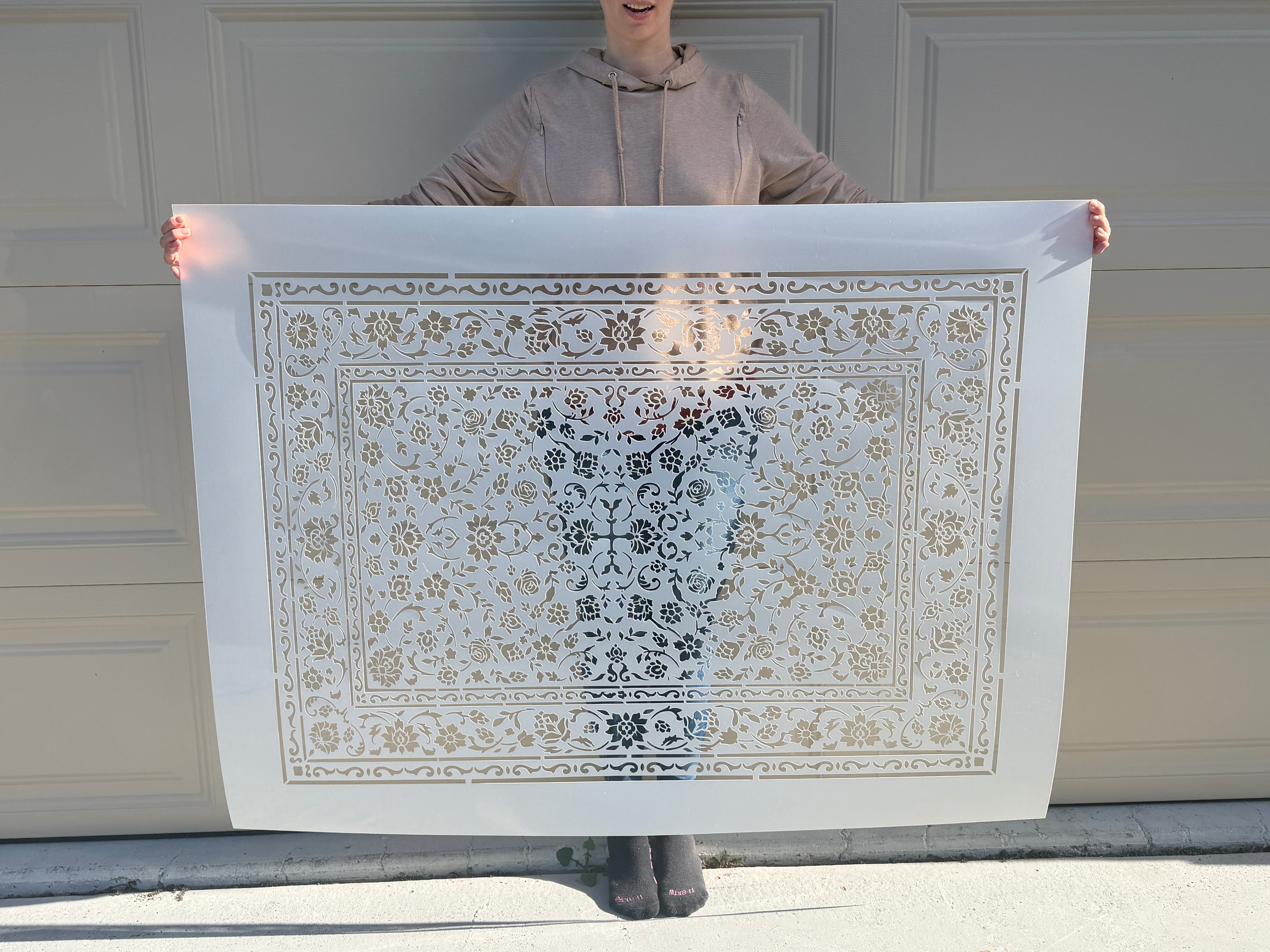
Mylar vs Polypropylene Stencils
Mylar and polypropylene are the two most common stencil materials, and both do the job well — but they're not interchangeable. Here's how they actually differ in practice.
Mylar: the industry standard
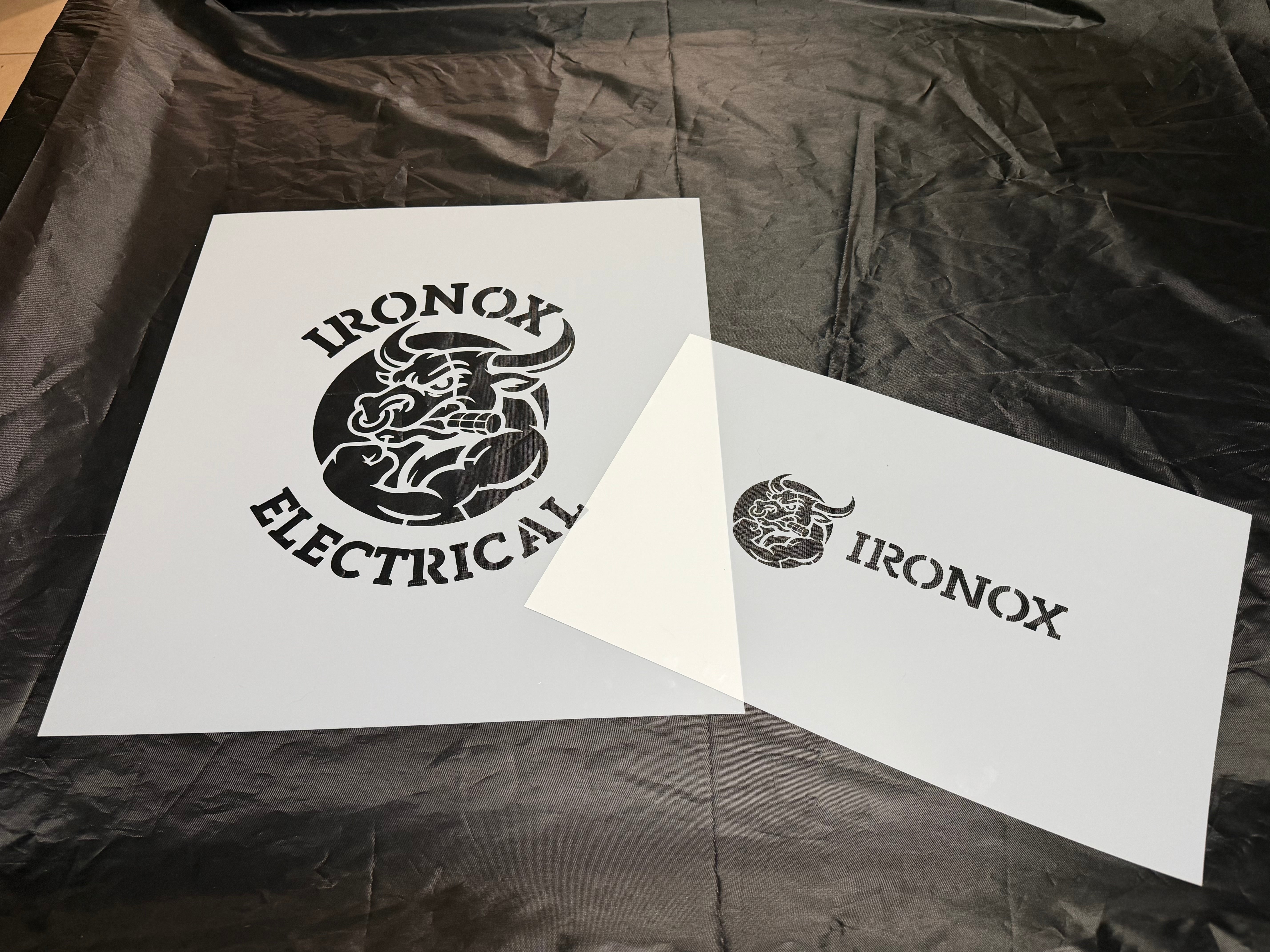
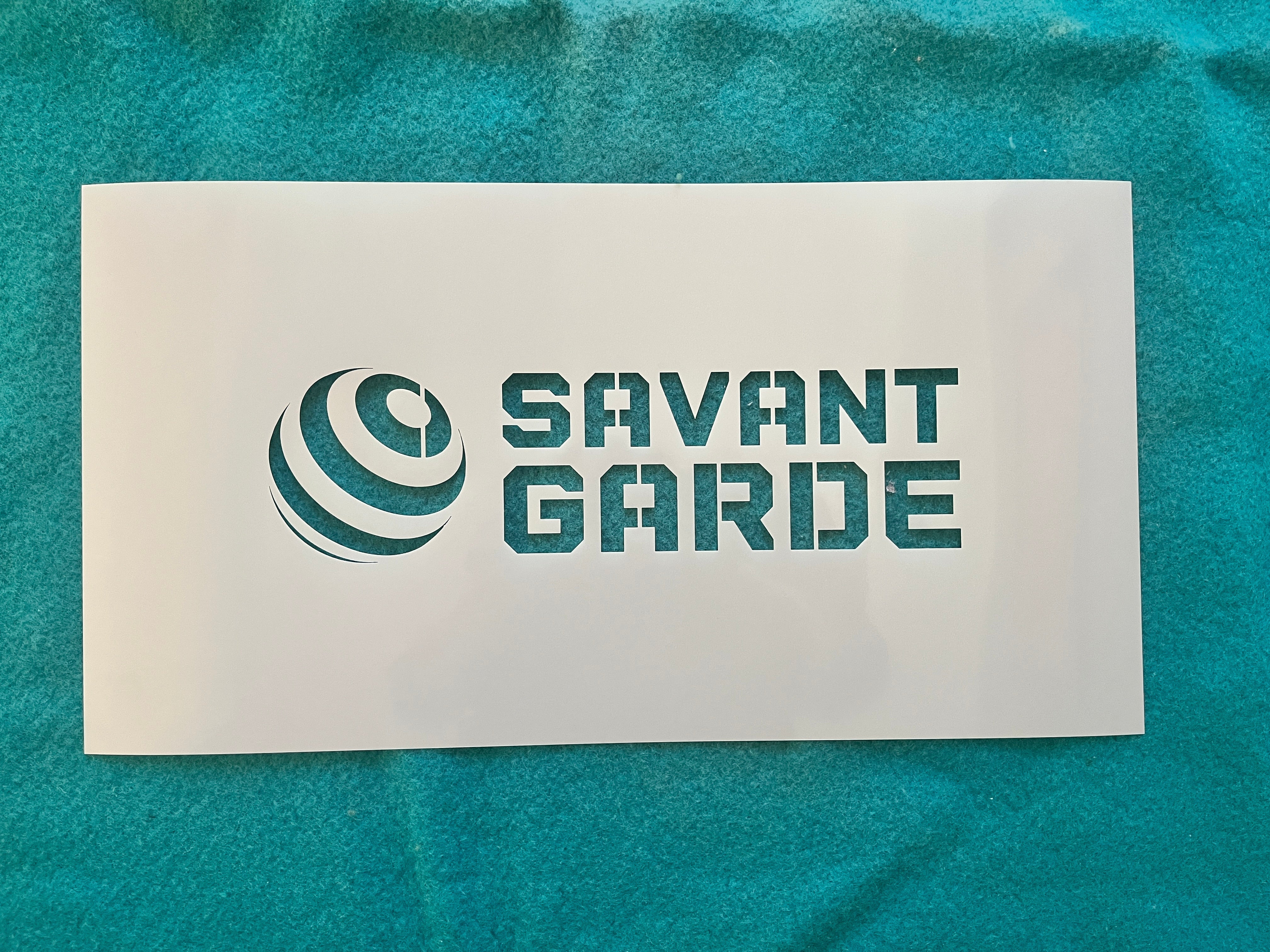
Mylar is a polyester film prized for its durability and heat resistance. It holds a sharp, clean edge, resists tearing, and stays flat even after repeated use, which is why it's the default choice for signwriters, industrial marking, and detailed artwork. It's also solvent-resistant, so it holds up well against spray paints and stronger cleaning agents used between jobs.
We stock Mylar in two thicknesses: 0.19mm for fine detail and curved surfaces, and 0.35mm for repeated commercial work. Both are available on our custom Mylar stencil product.
Polypropylene: flexible and budget-friendly
Polypropylene is lighter and more flexible, which makes it easier to wrap around curved or irregular surfaces like pipes, kerbs, or textured walls. It's generally more affordable and well suited to shorter-run or single-event use, though it doesn't match mylar's long-term durability under heavy, repeated use.
The size difference most people miss
This is often what decides it, and it rarely comes up until someone is already committed to a material.
Mylar comes on rolls — 1400mm wide by 120m long. Our laser bed takes the full 1400mm width and has a pass-through, so a single continuous piece can run to whatever length the job needs. Length is limited by what you can handle on site and ship, not by the machine.
Polypropylene comes in sheets — 2200mm × 1240mm. That is a generous sheet, but it is a hard ceiling. Anything larger has to be tiled across multiple registered pieces, with the joins planned into the design.
So for a long continuous run — a floor marking line, a wall of repeated lettering, a mural taller than 1240mm — Mylar is the only one of the two that will do it in one piece.
Side-by-side comparison
| Property | Mylar | Polypropylene |
|---|---|---|
| Maximum size | 1400mm wide, continuous length | 2200mm × 1240mm sheets |
| Durability | High — hundreds of reuses | Moderate — dozens of reuses |
| Flexibility | Moderate | High |
| Heat resistance | High | Moderate |
| Best for | Fine detail, industrial, repeated use, long runs | Curved surfaces, short-run, budget projects |
| Typical cost | Higher | Lower |
Which should you choose?
If you're stencilling a curved surface once or twice, polypropylene is the practical, cost-effective option. If you're marking crates every week, cutting fine text or logos, need a stencil that survives dozens of paint jobs without falling apart, or need a single piece longer than 2200mm, mylar earns its higher price.
If neither is quite right, we also cut MDF and plywood for large rigid stencils, and adhesive vinyl for single-use work on irregular surfaces. Choosing the right thickness covers the next decision once you have settled on material.
What we would pick for you
Tell us the surface, the paint system, the finished size, and roughly how many times you expect to use the stencil, and we will make the call and say why. Every order gets a digital proof within one to two business days before anything is cut, so there is no risk in being unsure at the ordering stage.
Email info@tinkable.com.au or call 0418 873 436. Quotes are free, and cutting happens in our workshop at Eatons Hill in north Brisbane.

Written by Katharine Huth

Leave a comment
This site is protected by hCaptcha and the hCaptcha Privacy Policy and Terms of Service apply.