Industrial Marking Stencils for Australian Businesses
Industrial stencils show up everywhere in Australian warehouses, construction sites, and manufacturing floors — often doing quiet, unglamorous work that keeps operations compliant and organised. Here's what businesses actually need to know when ordering them.
Common industrial applications
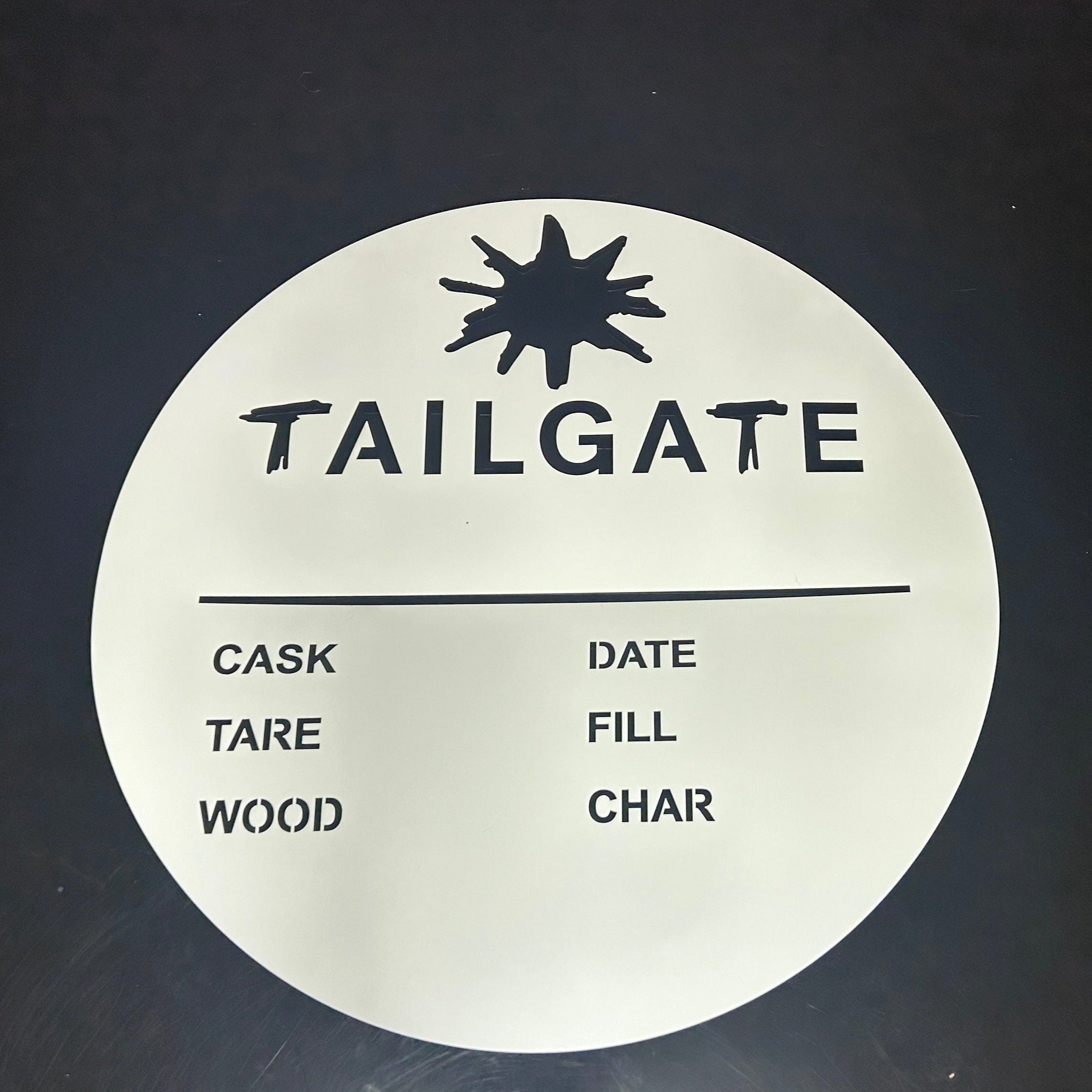
Typical uses include crate and pallet marking for freight and export, equipment identification numbers, safety and hazard signage, floor marking for traffic and storage zones, and asset tagging across fleets of machinery or containers.
Durability matters more than detail
Unlike decorative stencils, industrial stencils are judged on how many times they can be reused before the edges wear out — not on fine artistic detail. A thicker mylar or polypropylene stencil that survives being dragged across concrete or exposed to weather is worth more here than one with intricate line work.
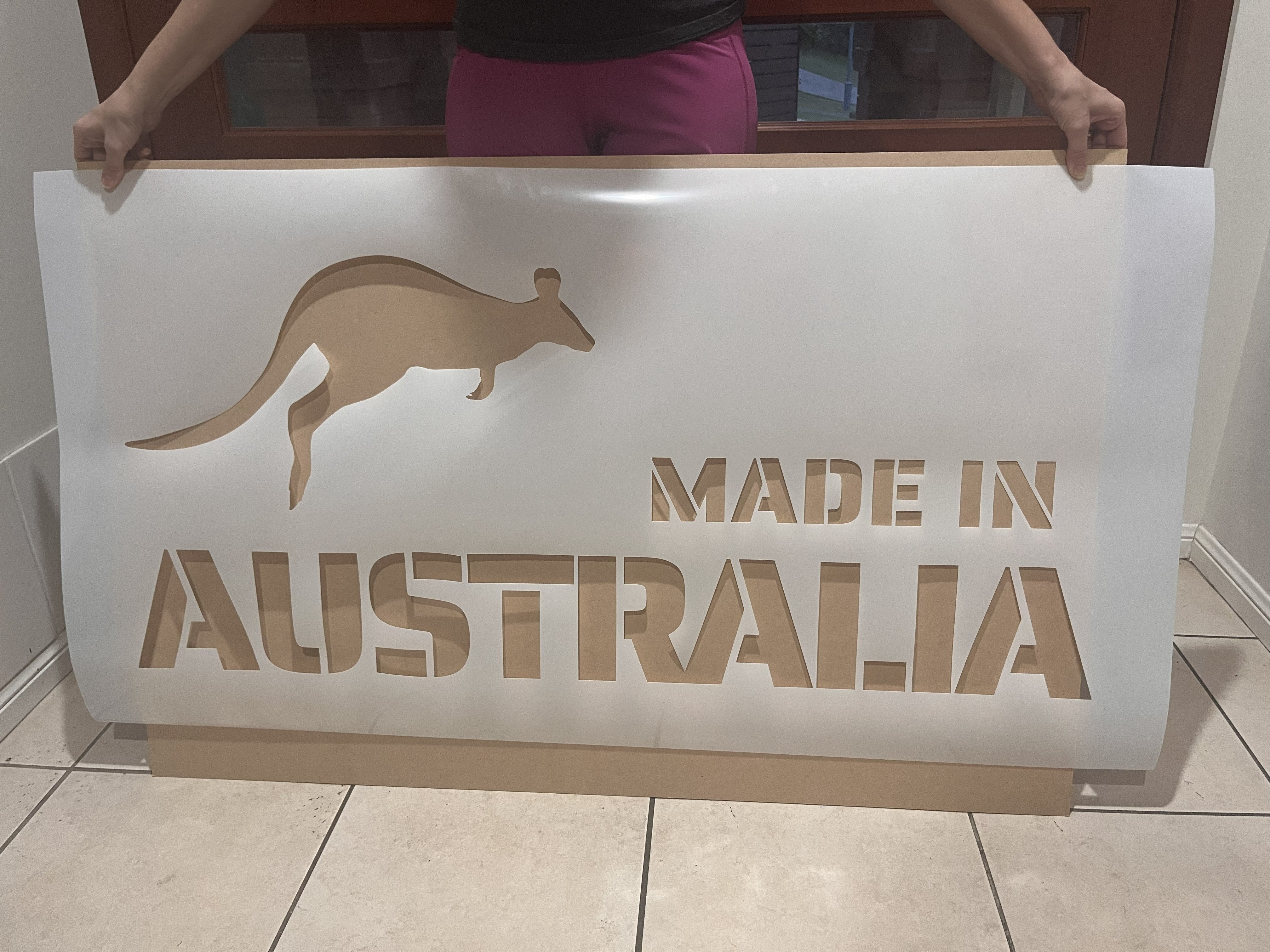
For industrial work we supply 0.35mm Mylar as standard, with a 50mm overspray border. Where a job needs genuine rigidity — repeated floor marking, or a stencil that gets walked on — MDF and plywood are worth discussing.
Compliance and standardisation
Many industrial marking jobs need to match a specific font, size, or colour standard — for hazard classifications, container codes, or internal asset numbering systems. A supplier who can work from your existing specification sheet, rather than a rough sketch, will save time and avoid rework.
Send us the spec sheet. We cut to a supplied specification routinely and will flag anything in it that will not hold up as a physical stencil before we cut, not after.
Weather and chemical exposure
Outdoor and site-based stencils need to cope with UV exposure, moisture, and sometimes contact with fuels or solvents. Mylar generally handles this better than lighter plastics, which is why it's the more common choice for anything left outdoors or reused across multiple sites.
Ordering in bulk
Businesses marking large volumes of stock or equipment often order sets of stencils — numbers, letters, and standard symbols — rather than one-off custom pieces. If this applies to you, ask your supplier about bulk sets and consistent sizing across the whole set, so everything lines up when used together.
We supply A–Z letter sets and 0–9 number sets cut to consistent sizing, so characters align when used together. Bulk discounts apply to larger runs and repeat supply, and there is no minimum order if you only need one.
What to provide when ordering
- Any compliance standard or spec sheet you need to match
- The surface (concrete, metal, timber, container) and typical weather exposure
- Expected frequency of use
- Whether you need a full set (numbers/letters) or a single custom mark
Related products
For custom marks and logos, use our custom Mylar stencils. For floor and traffic marking at scale, see large custom stencils. For switchboards, asset tags and safety identification, we also manufacture engraved traffolyte labels and electrical tags.
Repeat and scheduled supply for trades, contractors and government is standard for us. Email info@tinkable.com.au or call 0418 873 436 with your volumes.

Written by Katharine Huth

Leave a comment
This site is protected by hCaptcha and the hCaptcha Privacy Policy and Terms of Service apply.