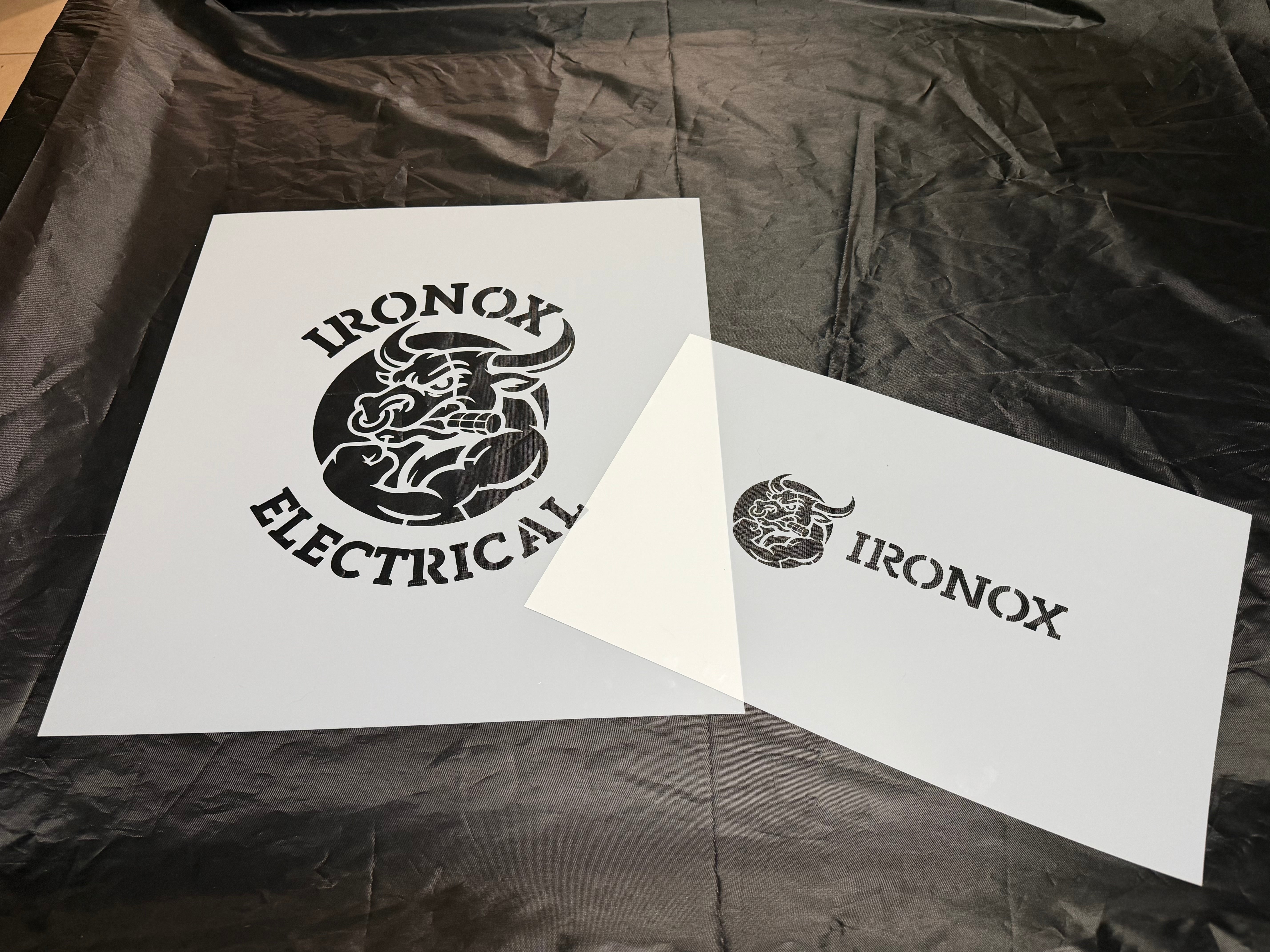
Custom Stencils Australia: Complete Buyer's Guide
Buying a custom stencil sounds simple until you're faced with material choices, thickness options, and turnaround times you didn't know existed. This guide walks through everything to consider before you order, so the stencil you receive actually does the job you need it for.
Start with the surface
The surface you're painting or marking determines almost every other decision. Smooth, flat surfaces like glass or laminate work well with thinner, flexible materials. Rough or curved surfaces — brick, timber, concrete, pipework — need a stencil that can flex without cracking and hold its shape against uneven textures.
For curved and textured surfaces we generally recommend 0.19mm Mylar, which conforms without creasing. For flat surfaces taking repeated work, 0.35mm holds its shape better. Both are available on our custom Mylar stencil product.
Think about how many times you'll use it
A stencil used once for a single event can be lighter and cheaper. A stencil going into a warehouse for daily crate marking, or one a signwriter will reuse across dozens of jobs, needs a durable material rated for hundreds of uses without the edges softening or tearing.
If it genuinely is a one-off — a single event, a one-time sign — a cardstock stencil costs less and does the job. For anything you will pick up more than a handful of times, 0.35mm Mylar is the honest recommendation. We cover the trade-off in more detail in reusable versus single-use stencils.
Work out how big it needs to be
Size is where suppliers differ most, and it is worth checking before you fall in love with a design. Many stencil cutters are limited by their bed size to something under a metre in either direction, which forces large artwork to be split into panels.
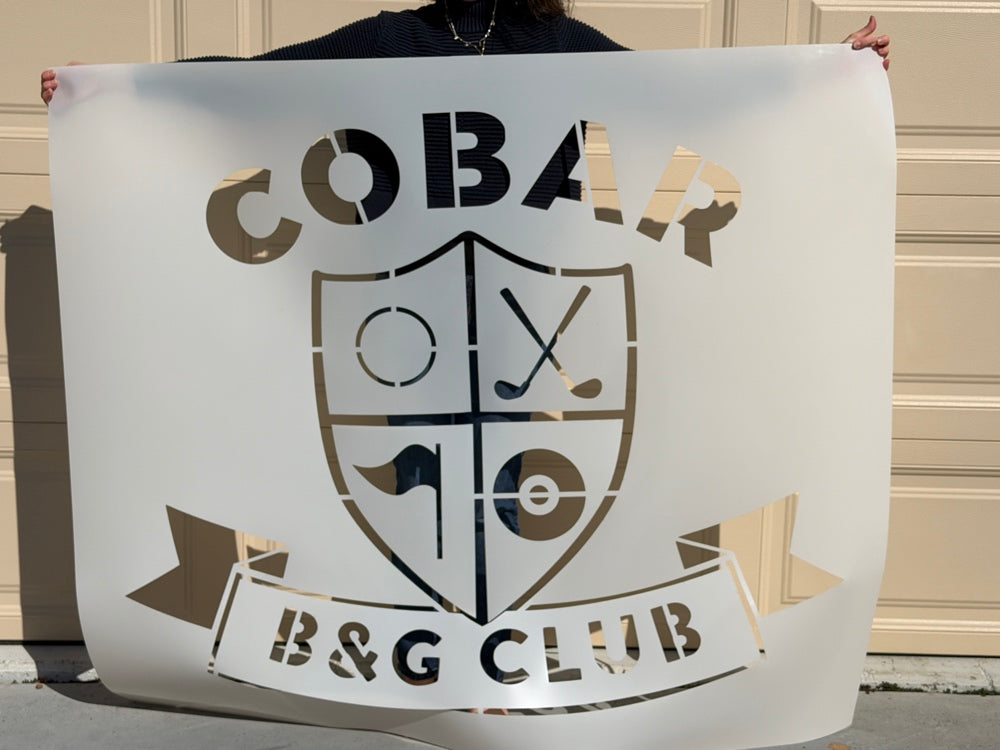
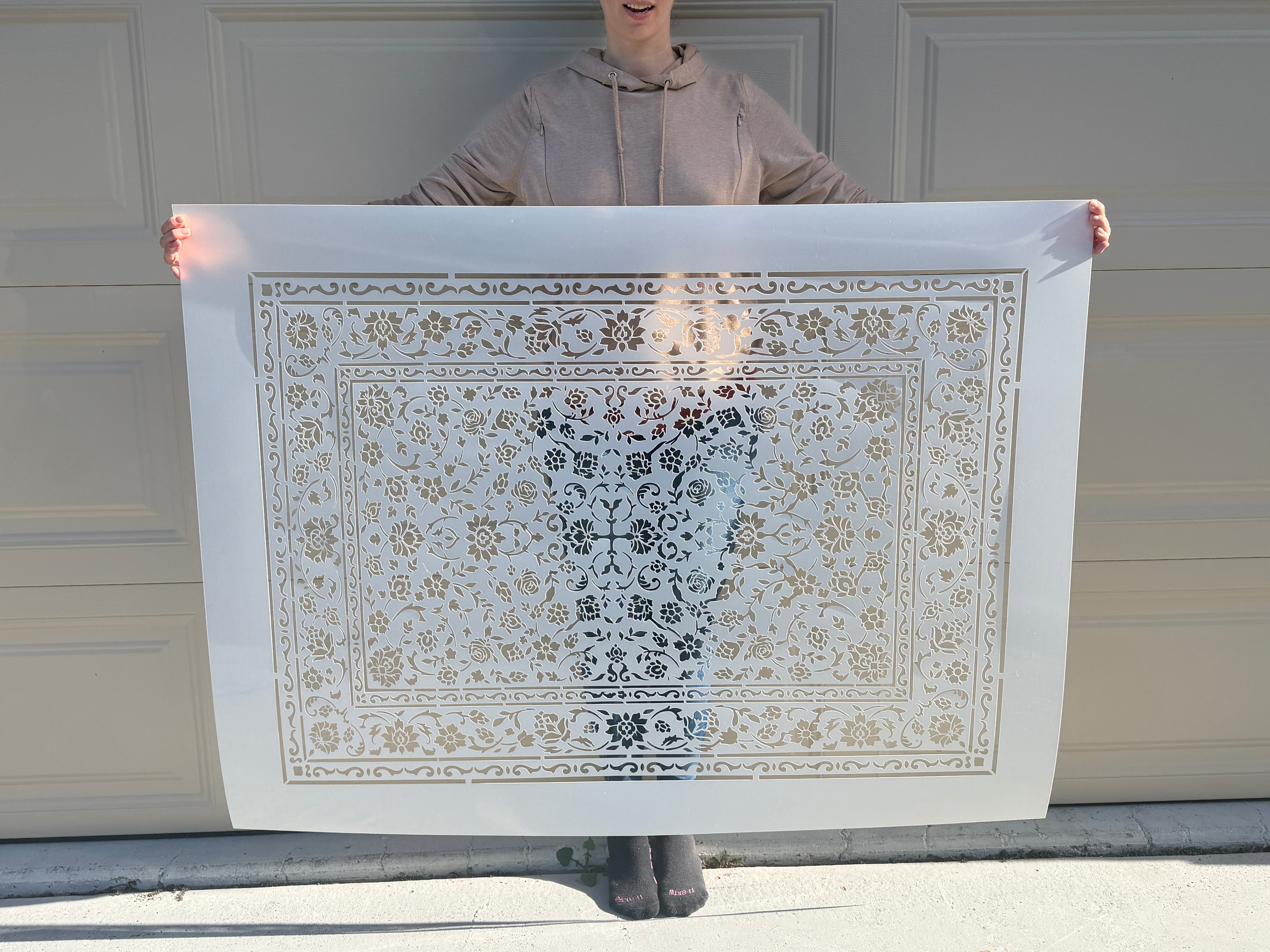
We cut 0.35mm Mylar from 1400mm × 120m rolls on a bed that takes the full 1400mm width, and our machine has a pass-through — so a single continuous piece can run to whatever length the job needs. Length is limited by what you can handle on site and ship, not by the machine. Designs wider than 1400mm are tiled across multiple registered sheets with the registration marks cut in, so the panels align when laid out.
Decide on detail level
Fine text, thin logo lines, and intricate artwork need a stencil cut with tight tolerances and a material stable enough to hold delicate bridges (the small connecting pieces that keep letters like "A" or "O" intact). Bold, simple shapes have far more flexibility in material and cutting method.
Bridging is the part most people have not thought about before they order. If you are supplying a logo, we add bridges during design preparation and position them to preserve the character of the artwork — the process is set out in how to turn a logo into a reusable stencil. If you only need lettering or numbering, our text stencil designer handles the bridging automatically, or you can order a ready-made A–Z letter set or 0–9 number set.
Factor in your application method
Spray paint, roller, brush, or industrial ink each interact differently with a stencil's edge. Spray demands a tight seal against the surface to avoid bleed; roller and brush work is more forgiving but benefits from a slightly thicker, more rigid stencil that won't lift at the edges.
Our stencils include a 50mm overspray border as standard, which keeps paint off the surrounding surface and gives you something to hold or tape down. If you are working with a spray gun or at distance, ask for a wider border when you order.
Common Australian use cases
Local businesses most often order stencils for site signage, safety and compliance marking, packaging and crate labelling, café and hospitality branding on coffee and food, and mural or feature-wall artwork for homes and commercial fitouts. Each of these has a "typical" material and thickness that suppliers can recommend once they know your surface and reuse needs.
- Café and hospitality branding — custom coffee and cocktail stencils
- Murals, feature walls and floor marking — large custom stencils
- Site signage, crate marking and compliance — custom logo and text stencils
- Switchboards and asset tagging — engraved electrical labels and traffolyte tags
Questions worth asking your supplier
- What material and thickness do you recommend for my surface and use case?
- What is the largest single piece you can cut?
- How many uses can I expect before the edges degrade?
- Can you supply a proof or digital preview before cutting?
- What file format do you need if I'm supplying my own logo or artwork?
How we answer those questions
Since we would rather you did not have to ask us in the dark, here are our answers to the questions above.
- Material and thickness: 0.19mm Mylar for fine detail and curved surfaces, 0.35mm for repeated commercial use. Polypropylene, MDF, plywood and adhesive vinyl are available where the job calls for them.
- Largest single piece: up to 1400mm wide and continuous in length, from 1400mm × 120m rolls on a full-width bed with a pass-through.
- Expected life: a 0.35mm Mylar stencil, cleaned while the paint is still wet and stored flat, will run through dozens to hundreds of applications.
- Proof: yes, always. A digital proof is issued within one to two business days and nothing is cut until you approve it. If the proof is not right, you get a full refund.
- File formats: JPG, PNG, PDF, AI, PSD, SVG, or a clear photograph. If the artwork is not stencil-ready we prepare it — minor adjustments free, larger work quoted first.
Everything is cut in-house in our workshop at Eatons Hill in north Brisbane and dispatched within two business days of proof approval. Free shipping Australia-wide on orders over $99.
A good stencil supplier will ask about your surface and application before recommending a material — if they don't, ask them the questions above yourself. Getting this right upfront saves a reorder later. If you would rather just talk it through, email info@tinkable.com.au or call 0418 873 436, or read the full FAQ.

Written by Katharine Huth

Leave a comment
This site is protected by hCaptcha and the hCaptcha Privacy Policy and Terms of Service apply.